Why Is Natural Wood Such a Good Choice for Shelves?
Wood has a special quality: it remains visually expressive even in its simplest form. A shelf doesn't need elaborate decoration, unusual shapes, or bright colors to stand out. The natural grain, variations in tone, and distinctive surface already create visual interest.
Unlike materials with uniform patterns, natural wood has its own individual structure. A single shelf may feature lighter and darker areas, flowing grain lines, and subtle contrasts. These natural characteristics give every piece its own personality.
Wooden shelves also help bring different materials together within an interior. They soften the coolness of stone, concrete, and metal, complement smooth painted walls, and work beautifully alongside glass, ceramics, and textiles.
Wood is especially effective in minimalist interiors. When a room features a limited palette and few decorative elements, the grain becomes one of the main visual features.
Walnut, Oak, and Ash - Different Characters, One Natural Material
The choice of wood species influences both the appearance of a shelf and how it complements the rest of the interior.
Walnut stands out for its rich brown tones and expressive grain. Its natural patterns add depth to a room, while its warm color pairs beautifully with light walls, stone, metal, and neutral shades. Walnut shelves can become a striking focal point even in a restrained interior.
Oak is valued for its distinctive grain and natural character. It works well in modern, Scandinavian, and classic interiors, complementing natural fabrics, light surfaces, and other organic materials.
Ash is known for its pronounced grain and interesting tonal variations. Depending on its finish and color, it can create either a light, understated accent or a more contrasting design feature.
Each wood species has its own visual character. When choosing a material, consider not only the shelf's color but also how its grain will interact with your flooring, furniture, walls, and lighting.
How Wooden Shelves Help Organize Different Rooms
Kitchen: Keep Everyday Essentials Within Reach
The kitchen is one of the best examples of how shelves can combine practicality with design. It's important to keep frequently used items accessible without overcrowding work surfaces.
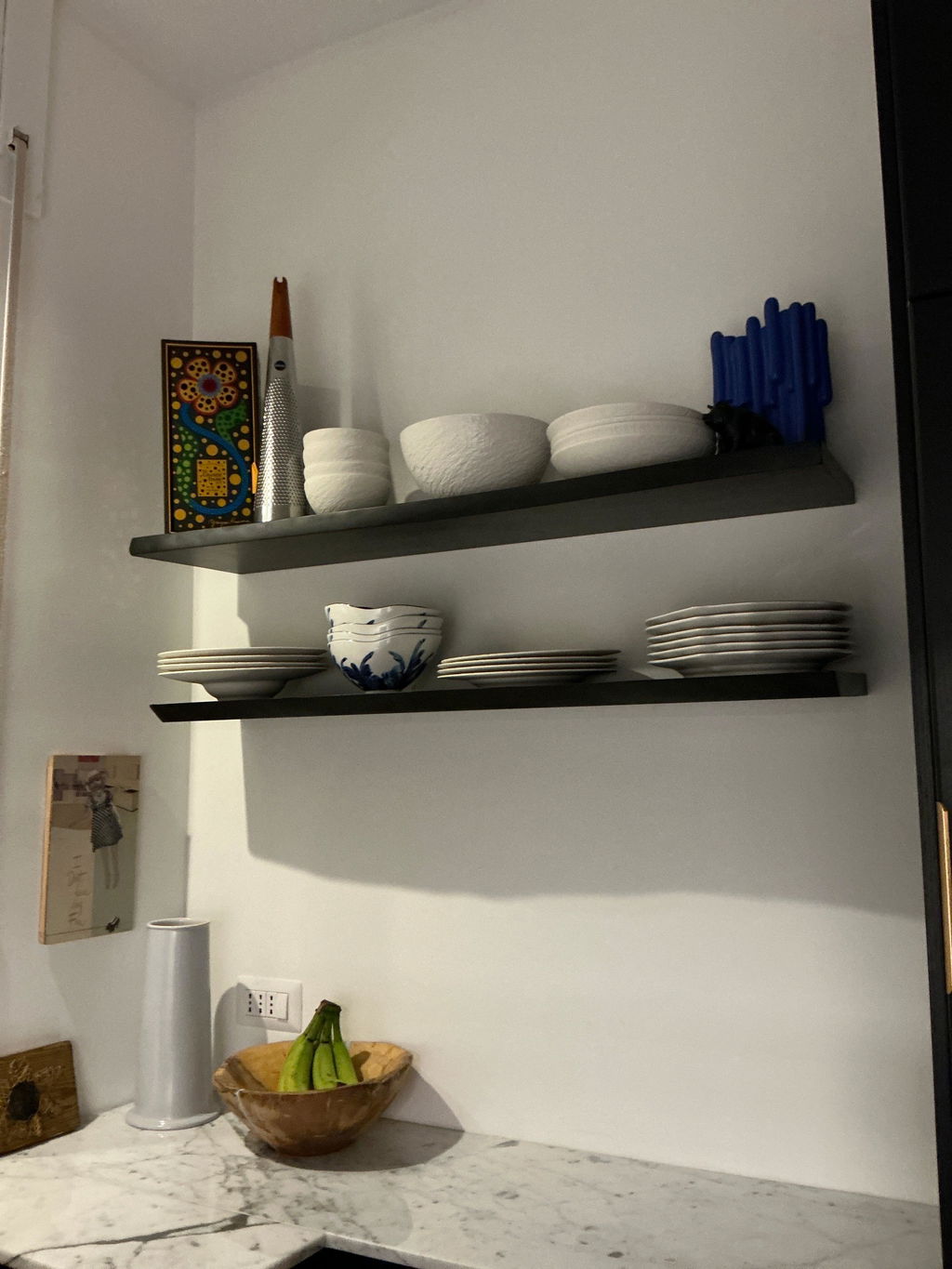
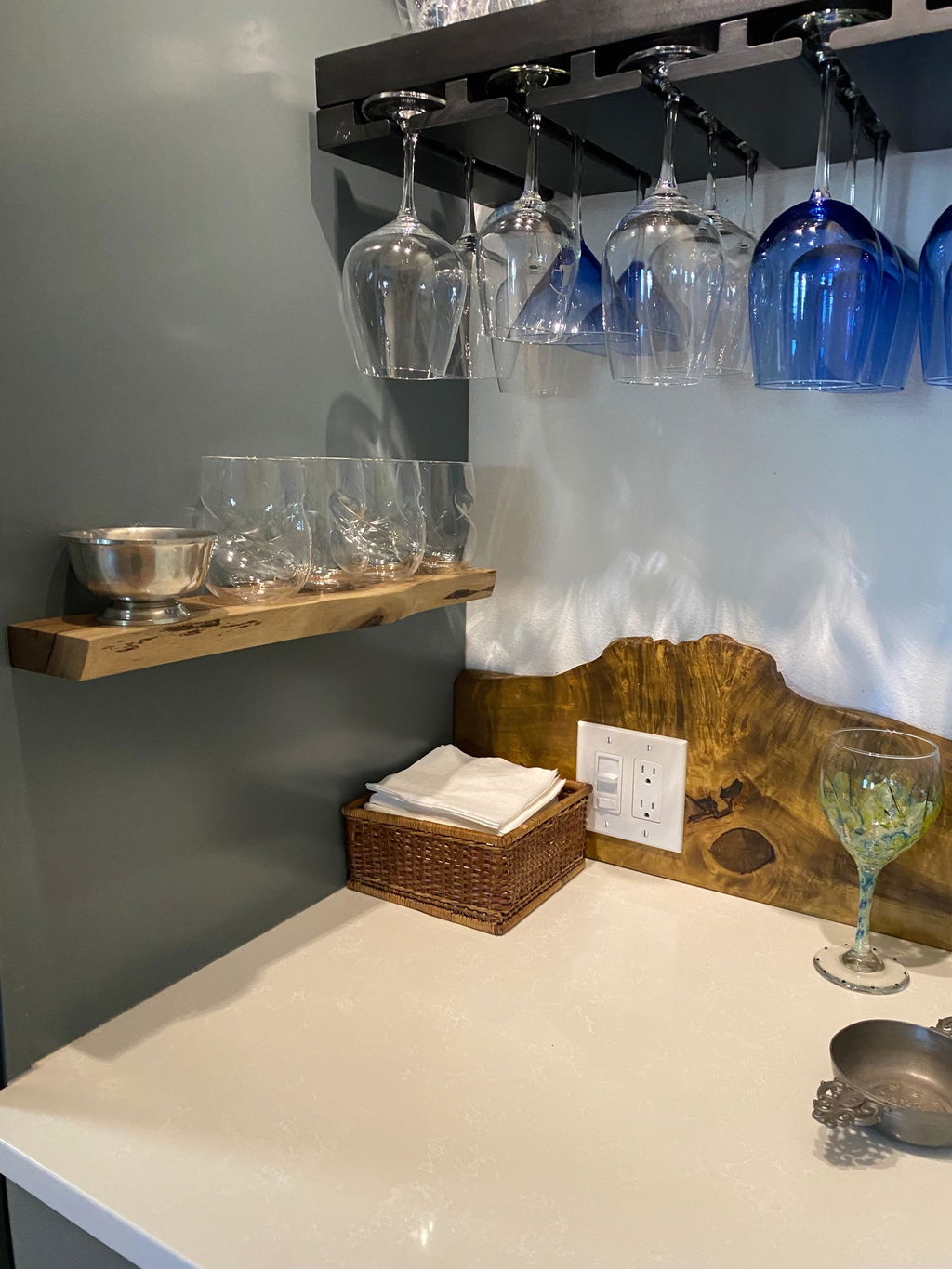
Wooden shelves can hold cups, plates, spice jars, dishes, and small kitchen accessories. They help make use of vertical space and free up the countertop for food preparation.
Beyond functionality, wood brings warmth to the kitchen. It pairs beautifully with white cabinetry, dark cabinets, stone countertops, tile, and metal details. Walnut, for example, creates a beautiful contrast against a light kitchen, while oak or ash complements interiors built around natural tones.
Open shelves also make it easy to refresh the look of a kitchen without replacing furniture. Simply rearranging a few objects or adding ceramics or a plant can give the composition a new feel.
Living Room: A Place for Books and Personal Stories
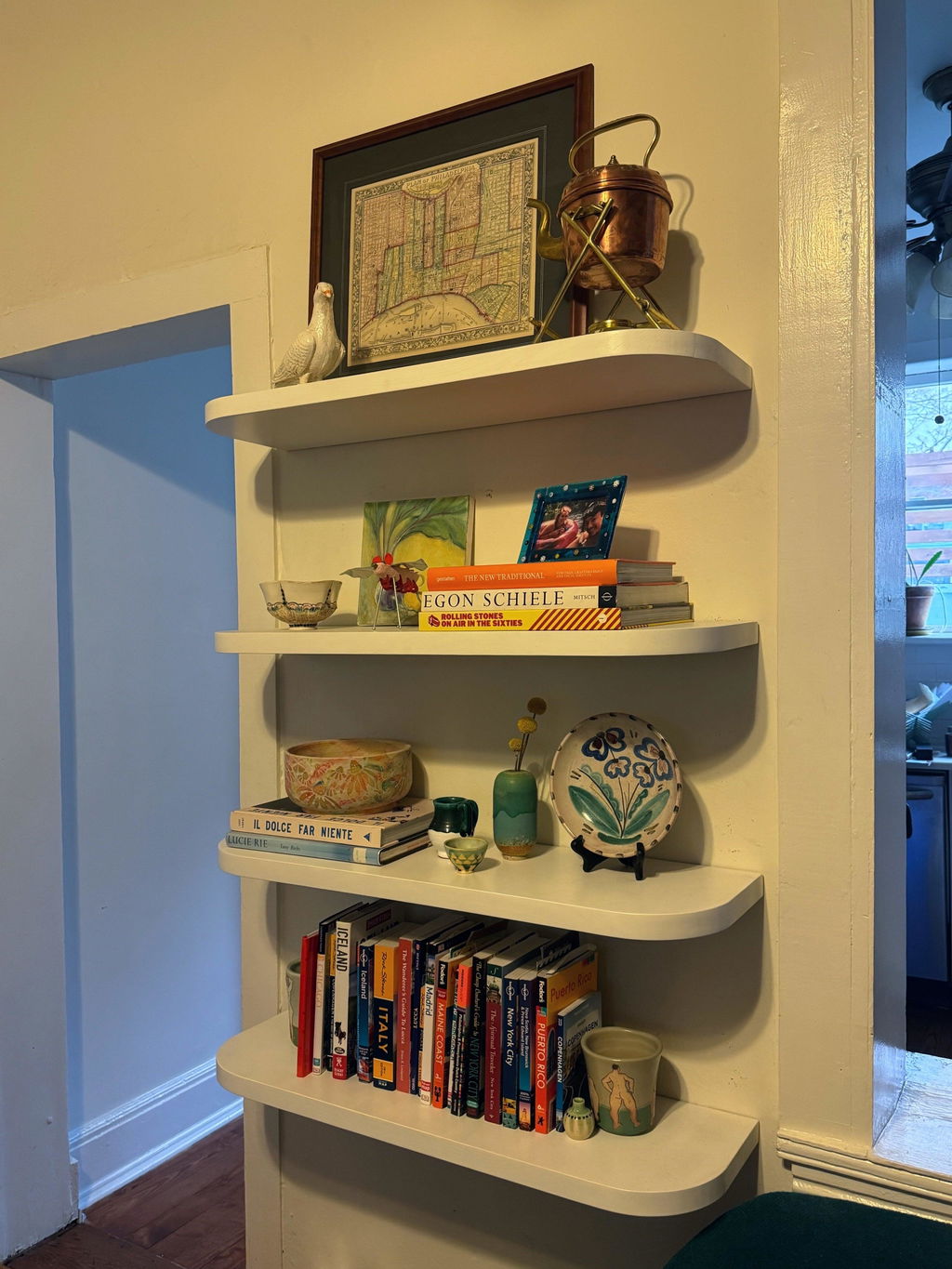
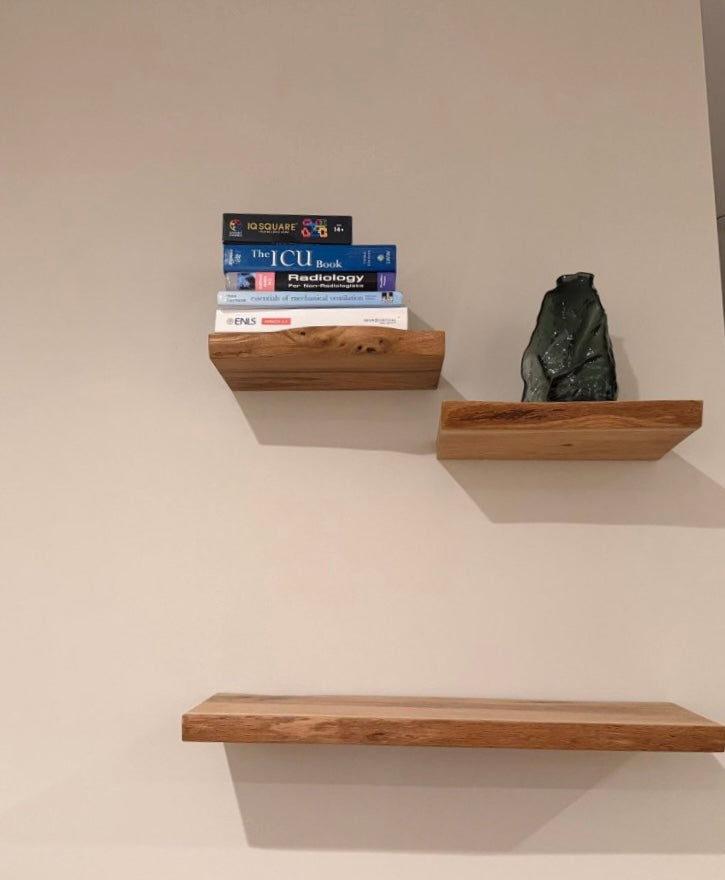
In the living room, shelves can serve several purposes at once. They provide space for books and decorative objects, bring attention to an empty wall, or create a composition above a sofa, cabinet, or desk.
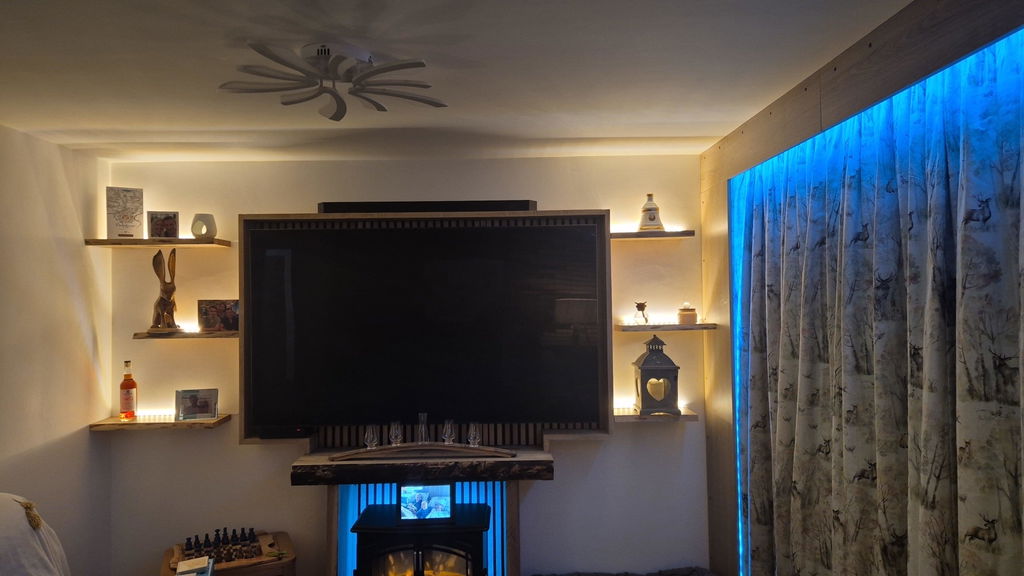
One long wooden shelf can visually connect several objects along a clean horizontal line, while multiple shelves of different lengths can create a more dynamic arrangement.
Most importantly, shelves can hold more than decorative accessories. Favorite books, travel souvenirs, family photographs, and handmade objects can all reflect the personality of the people who live there.
The result is a more personal space, with natural wood helping bring different objects together into a harmonious whole.
Home Office: More Organization, More Workspace
A workspace can gradually fill up with books, documents, notebooks, and accessories. Before long, there may be very little room left on the desk itself.
Shelves above or beside the desk help move some of these items onto the wall, keeping essentials within easy reach. Their height and depth should be carefully considered to suit their purpose without interfering with the workspace.
A wooden shelf also adds character to a home office, helping it feel like a natural extension of the rest of the interior rather than a purely functional corner.
Bathroom: Functionality in a Smaller Space
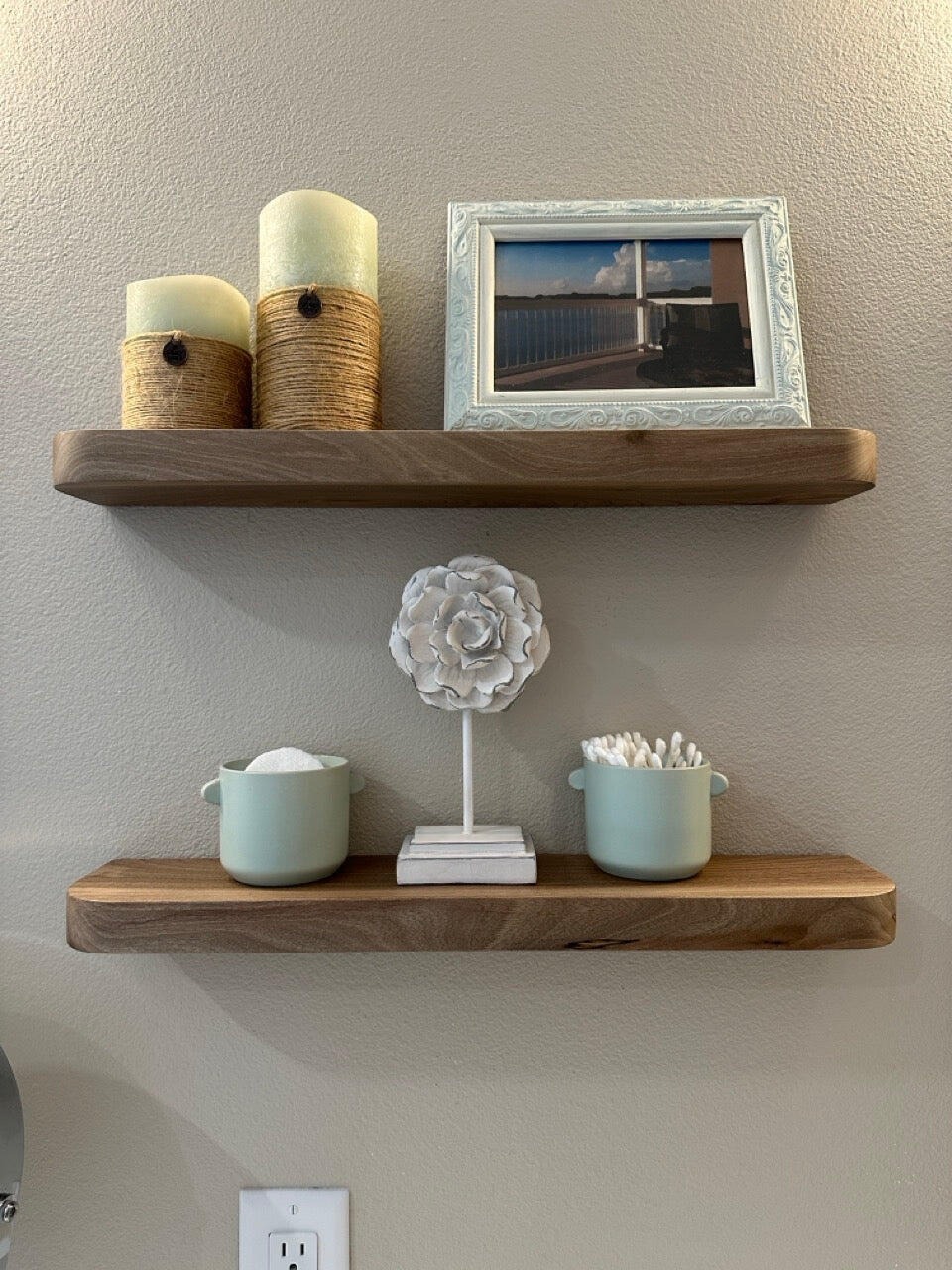
Bathroom storage is often limited. Shelves provide space for towels, cosmetics, and accessories without taking up additional floor area.
Wood also creates an appealing contrast with tile, ceramics, glass, and stone. Its natural texture softens the clean lines of bathroom fixtures and helps the interior feel warmer.
For this type of room, it's important to consider humidity, ventilation, the protective finish, and the conditions in which the shelf will be used. Appropriate materials and finishing help preserve its appearance over time.
Entryway: A More Organized Welcome Home
Entryways often have limited space, yet they need to accommodate plenty of everyday essentials. A small shelf can provide a place for keys, glasses, small accessories, or a decorative object that makes the space feel complete.
Rather than choosing a bulky storage unit, you can use a compact solution that fits the wall and doesn't obstruct the walkway. If heavier items will be stored, the expected load and mounting method should be considered in advance.
Floating Shelves: Visual Lightness and Clean Lines
Floating shelves are especially popular in modern interiors because of their understated appearance. Their mounting hardware is concealed or minimally visible, allowing the shelf to appear as if it extends naturally from the wall.
Without visible brackets, attention stays on the shape and texture of the wood. This is particularly effective with walnut, oak, and other species with distinctive grain patterns.
Floating shelves can be used individually as accents or arranged in compositions across several levels. One long shelf creates a strong horizontal line, while several shorter shelves offer greater flexibility for organizing objects of different sizes.
However, a visually lightweight design doesn't mean the construction can be overlooked. Length, depth, thickness, the weight of the objects, the wall material, and the suitability of the mounting hardware all need to be considered together.
The right mounting system is an essential part of a functional shelf. It must suit the specific installation conditions, and longer shelves or heavier objects require particularly careful planning.